
Learn the ideas that matter
The instructor explains the key concepts behind each week’s topic, so everyone has something solid to reason with before they start arguing about it.
Give your teen six weeks of live online learning on one substantial topic, with an instructor who explains the ideas that matter and a small group of teens who discuss them, challenge them, and help each other improve the work.
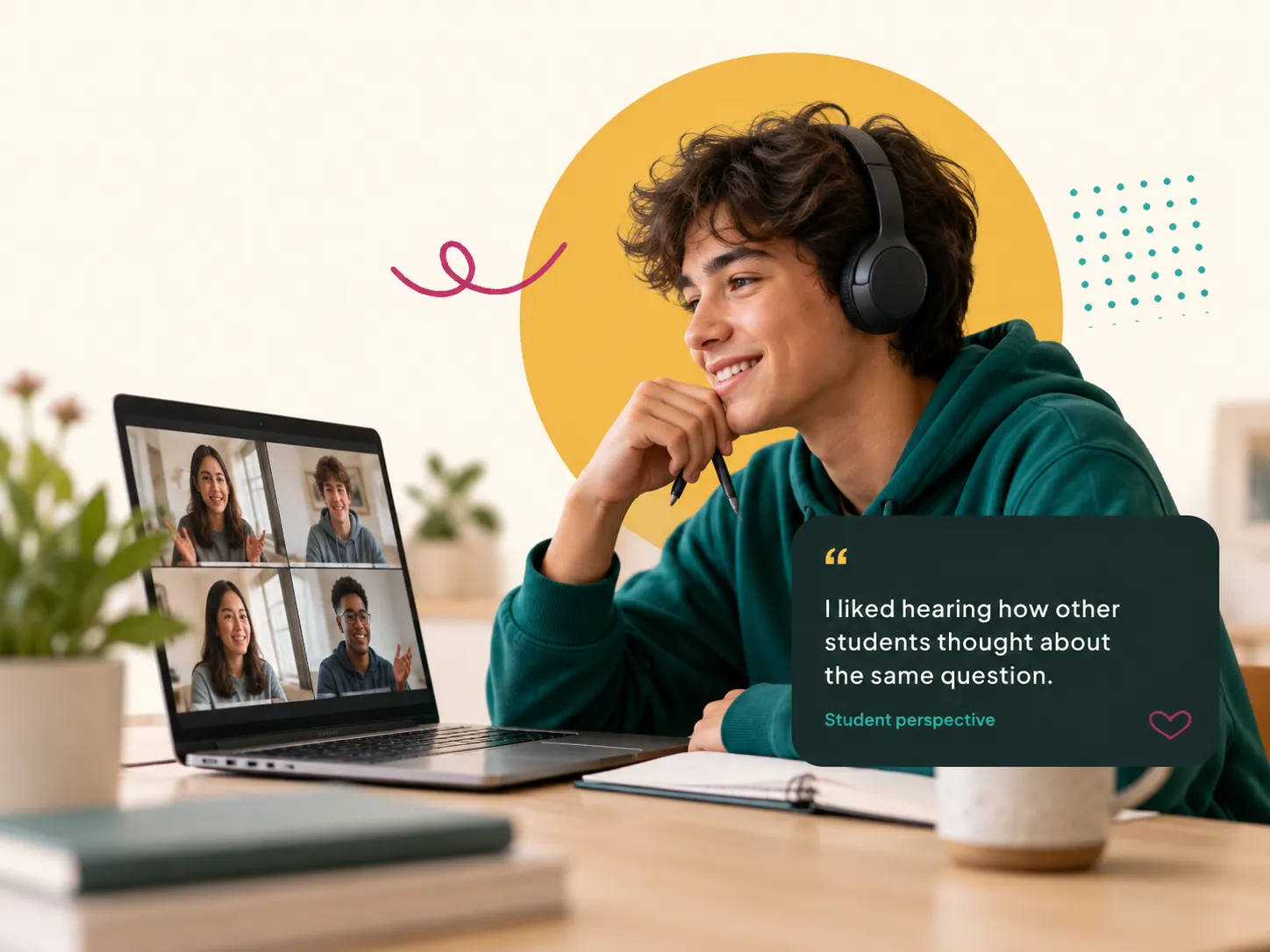
Good teaching and real ownership are not opposites. Students get clear explanations of the ideas that matter, then put them to work: investigating questions, making a case, and finding out what holds up. The thinking, and the conclusions, are theirs.
The instructor explains the key concepts behind each week’s topic, so everyone has something solid to reason with before they start arguing about it.
Research, compare evidence, look at examples, and form a point of view instead of waiting for an answer to be handed to them.
Apply what they’re learning to analyze a situation, solve a problem, or reach a recommendation, using AI and other tools for research and creation while the decisions stay theirs.
Share work, hear questions and reactions, and rework the thinking that did not hold up.
A group is not automatically better than learning alone. It helps when the conversation is worth having, so each week is built around a question students can think about differently, and students bring work the others can actually react to.
Students who start from the same question often land in different places. Hearing how others got there shows you what you missed and what you assumed.
Disagreeing only helps if you can say why. Students give reasons and evidence, respond to what others say, and decide whether their own view should change.
Classmates ask the hard questions and point out what is missing, sometimes building on each other’s ideas. Then students get a chance to rework their own.
Students newer to a topic get more structure. As they gain experience, they steer more of the work: the questions, the approach, and when to change course. That is the direction Yonder Class is designed to move in, always inside a supportive group.
Explore a variety of real-world challenges. Yonder provides the structure and starting point; students make choices, build something tangible, test it, and see what happens.
Stay with each challenge longer: compare approaches, gather feedback, test alternatives, and improve the work over multiple rounds.
Develop one meaningful Project across the course, deciding more of what to pursue, how to test it, and when to change course, with the support of an instructor and group.
Explore a topic for six weeks through live discussion, real questions, projects, problems, and work students can explain and defend.

Students work with the ideas behind everyday money decisions, from earning and taxes to borrowing, saving, and investing. They investigate how those decisions play out, then explain and defend their own reasoning to classmates who see it differently.
$249for the six-session class
Who decides what your work is worth?
How much of the money you earn is actually yours to spend?
What’s the difference between a good deal and a good decision?
What would have to be true for borrowing money to be the smart choice?
What would make you invest your money instead of keeping it in savings?
What would you sacrifice for the life you want, and what wouldn’t you?
Each student reaches a money decision or conclusion of their own, tests it against other students’ questions, revises their thinking, and explains where they landed. AI can help with research and materials; the reasoning and the choices are theirs.
Everyone begins with the same key ideas and the same question, with room to pursue different directions from there.
Students research, compare evidence, ask questions, challenge assumptions, and learn from how other students see the problem.
They use what they’re learning to take on a project or problem, get feedback, and revise their work.
Students finish by explaining a decision or conclusion of their own to people who will ask hard questions. AI can help make the materials; the thinking is theirs.
You should understand what your teen is exploring and how the experience works without needing to manage the conversations or choose the direction for them.
Understand the topic and the kinds of questions and ideas your teen is spending time on.
See the basic structure, expectations, and kinds of work students are taking on.
Stay informed while your teen contributes, makes choices, and develops their own point of view.
I liked hearing how other people thought about the same question. It made me rethink some of my own ideas.
It felt different from a normal class because we actually talked about what we thought and worked on things together.
I wanted my teen to have more chances to discuss ideas with other students and do something meaningful with what they were learning.
Get the basics here, or book a short intro call if you’d like to talk through fit first.
Book an Intro CallYonder Class is a six-week live small-group learning experience built around one shared topic. An instructor explains the key ideas, students investigate questions and work on projects or problems, and live time is used to discuss ideas, get feedback, and learn with other students.
The current class explores personal finance, money management, investing, and the stock market.
Students may research, compare examples, test an idea, or work on something they can bring back to the group. The work gives everyone something real to discuss and build on together.
No. The class is designed for students who are interested enough to explore the topic, not students who already know the answers.
Yes, for research, analysis, and making materials. What matters is their own thinking: the questions they pursue, the decisions they make, and how they respond when other students push back.
Each six-week course is $249. The Fall 2026 class includes Yonder Plan from November 4, 2026 through January 15, 2027.
Give your teen a place to pursue what they care about, take on real challenges, and become more capable of directing their own path.